 Episode 1
· 01:08:15
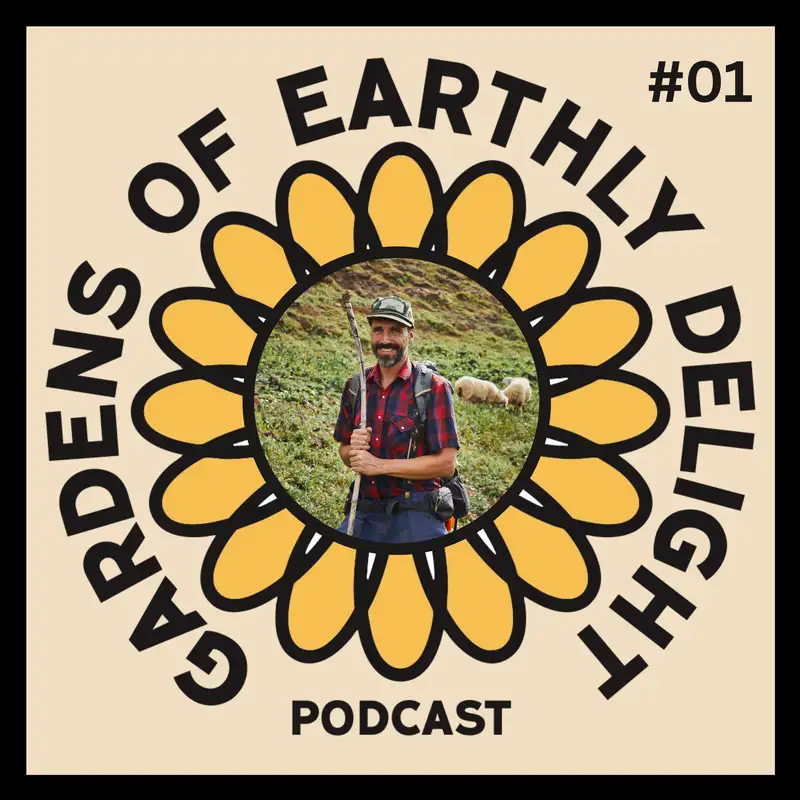
Welcome to the very first episode of the Gardens of Earthly Delight podcast. Back in late September, I met with Trevor Warmedahl also known as Milk Trekker, in the Italian city of Bra. We were both there for one main reason, and that reason was cheese. It was the biannual cheese festival hosted by Slow Food.
Trevor is a nomadic cheese maker, teacher, and author who's on a mission to bring the knowledge of endangered cheese and milk fermentation practices from rural pastoral communities around the world back home to North America to educate and benefit cheese makers. He teaches through his sour Milk School, five day workshops that he hosts in the USA and abroad. In 2022, he won the Daphne Zeppos Teaching Award, an annual scholarship given to food industry professionals to further their learning and their ability to educate others about cheese specifically through traveling.
After a decade of traveling and working on dairy operations of varying scales, Trevor's releasing his first book on February 17th, 2026 with Chelsea Green Publishing. His book is aptly named, Cheese Trekking, How Microbes, Landscapes, Livestock, and Human Cultures Shape Terroir.
Trevor and I sat and talked for over two hours, all about cheese, and he shared stories from his travels and the wisdom he's gathered over the years. I've condensed our talk down to about an hour, but if you'd like to hear the full conversation, consider subscribing to my sub stack, where you can hear more fascinating facts about cheese and more about Trevor's background and journey to becoming the nomadic cheese maker and teacher he is today.
You can find and follow Trevor on substack at milktrekker.substack.com and Instagram @milktrekker. Also be sure to pre-order or buy his book as soon as it hits the shelves.
Thank you for being here and listening. Thanks to Trevor for taking the time to speak with me. And without further ado, on with the show.
Milk and cheese evokes really strong emotions from people. And there's like a polarized divide between the two camps of pasteurized versus raw milk. And it just all seemed off to me. And I eventually read this book by this guy, David Asher, who wrote the art of natural cheese making and kind of was like the pioneer of
what is now small but rising natural cheese movement he challenges the use of all these industrial products, especially the starter cultures, where basically by purchasing these from transnational corporations, it's the equivalent of buying your seeds from Monsanto, where you're getting them from the laboratory, culturing your milk, and then you have to keep buying them. Right. So they kind of have a, a chokehold on you
Big time, big time. And they're like these select strains of bacteria that are found in milk or in cultured dairy products, but they've been isolated and raised in a laboratory and then kind of made into this freeze dried mixture. So that's what people are fermenting their cheese with. So is that a GMO product? Well, we don't actually know because there's very little transparency about it, but it seems like-
Not necessarily, but even if it's not the way that microbes work, they shift so rapidly compared to organisms that have larger, longer life cycles. very quickly these populations that came from a wild environment like milk or a heirloom yogurt or something, they become kind of more domesticated.
And I saw like flaws with that, especially once I read David's work and what he's saying is that you don't need to use those. You can get all the microbes you need to make any cheese from healthy, raw milk. That it's all there and that in fact, milk is meant to turn into cheese.
Right. Now I've heard you, I want to talk about this. I heard you say that cheese is not a human invention. And now when I think about cheese, it's like, I think it's a
crazy thing, like who figured that out and when and how, but also, talking that it's not a human invention, does anything else naturally eat cheese? made for anybody else but humans? The reason why I use that statement, and that also came from
from David Asher, like not only looking at the cultures that you're using to ferment the milk, but the rennet that's used to coagulate the milk. Rennet is a topic that's very dear to me and I like did a research project for the Daphne Zeppos Teaching Award in 2022, looking at places in the world where the cheesemakers still make their own rennet from animal organs. The fourth.
stomach or the fourth compartment of the ruminant digestive tract, the abomasum, secretes enzymes that coagulate milk. when a... So that's only in curd digesting animals? Yeah, it's in ruminants. Okay, goats. Goats, sheep, cow, buffalo. Donkey. Yeah, they're somewhat different. Equines have like, it's somewhere in between the ruminant and the gastrointestinal system like we have.
It's like an in-between. I don't know as much about that. But even in humans and other primates, the milk is basically coagulating in the stomach because this is what milk needs to do for the baby to get the nutrients out of the food. So the liquid milk is just a temporary state for the nutrients to flow from the mother into her child. it's like a vehicle, but once it
in the case of a ruminant, once it goes into this fourth stomach, it coagulates. Those enzymes are secreted with the express purpose of coagulating milk. So it turns into cheese inside of the abomasum. In the young. Yeah, in the young animal, like within the first two months of life when its diet is almost solely milk. And then slowly the enzymes shift as it starts to digest plants. And...
To make rennet the really old school way requires harvesting this organ, killing the young animal at a young age, like around three to four weeks old. So for me, this is the heart of the ethical dilemma of consuming milk is that in some ways it doesn't necessarily require, but it most often involves the sacrifice of these very young animals.
not just so that you can make rennet from their abomasum, but so that the milk that they would otherwise drink can be ours for making cheese. And so I love to talk about this ingredient, rennet, and this biological process, because I think this is something that needs to be confronted, that like when we consume milk, animals are dying. So there's no such thing as vegetarian cheese in my opinion.
And that doesn't necessarily mean that it's an unethical thing I think that dairy and cheese making can be done in a highly ethical manner. And those are kind of the places that I'm going and the people that I'm visiting are examples of this alternative approach to dairying where it is still cyclical. mean, when you have something on mass scale, I mean, I think many people have,
either seen or know about the PETA videos of the big dairies, and it's awful. I mean, it's just horrendous. And just knowing that a cow needs to give birth in order to produce milk. So what's happening to all those calves? Exactly, exactly. So just like the issue of raw milk has become this divided polarized, and I think both sides are maybe not looking at it rationally anymore.
the conversation around dairy, it's like either you don't consume it and you're vegan and you have this ethical high ground or you are part of this industrial system. So I'm looking for that in between where there's a lot of different ways that we can relate to dairy livestock, to our ecosystems, to the planet and to our food. But the statement that milk is meant to be cheese is
important because there's such a fixation in America and it's rooted in the UK and the colonies of the UK. An obsession with drinking sweet, that is unfermented milk, which is very abnormal historically It requires refrigeration to keep milk from fermenting. at
the fact that milk is meant to coagulate in the stomach of a young animal, it's also meant to ferment. It's designed to acidify. And it has the microbes that needs to do that in healthy raw milk. So like basically to prevent milk from fermenting is to prevent it from following its destiny. And it requires a huge amount of energy.
and it makes it more fragile and more prone to
taken over by problematic microbes, by pathogenic microbes. It's a really good point about refrigeration. Yeah. That's a pretty new thing. Definitely. to humanity. Exactly. Incredibly new. And we take it for granted now, but it's required in order to keep the milk from souring spontaneously. So that's kind of like what I teach and what I write about. Like my school is the sour milk school because we're working with
we're letting milk get sour. it's like an idea that we've been taught is bad, right? Like we were taught to not leave the milk on the counter or it will go sour. And that's exactly what I'm saying we should be doing. Is letting the milk ferment and like encouraging it to ferment basically as soon as possible without any intervening refrigeration, turning it into cheese. Like it seems like this is what was done in the past with milk. Maybe the farmers were consuming a little bit or like...
Goat milk in particular has a long history of being fed to really young people and really old people or anyone with a compromised immune system. Goat milk is highly medicinal in many ways. Now I've heard something how goat milk is more easily digested by humans versus cow. It is, it is. And so there's a lot of problems with the milk that we're consuming in large amounts.
in America and the model that's being pushed on the rest of the world of consuming cow's milk, especially from like the Holstein Friesian breed. It's like very low in nutritional value compared to some of the more heritage breeds that give less milk, but it's richer. So you're starting off with low nutrition and then you're pasteurizing it, refrigerating it, shipping it. It's like wonder bread. It's the same mentality of stripping
what makes these foods so beneficial to us and they become a commodity. So cow's milk, like, that comes down to mean, some people have problems with the proteins or the lactose, but lactose is in all milks. But with goat milk, sheep milk, they're just more digestible. A lot of it comes down to the fatty acid profiles. They're like more similar to human milk and are just easier for people to digest.
So they're kind of their own category. But this idea that milk can be consumed in this sweet state is a modern concept and goes against what biology shows us about milk, that it's designed to ferment, designed to coagulate, and has everything it needs to do that. So cheese is really milk living its destiny.
It's based on this biological process that humans observed. There's no evidence for this, but it seems likely that at some point, it could have happened before humans even domesticated dairy animals, somebody cut open the stomach of a young milk-drinking animal, like an animal that they were hunting or had died somehow, and found the cheese inside and ate it. Oh shit this is good. Yeah, exactly.
for humans to start making cheese is a form of biomimicry. it would have happened spontaneously once you're milking animals. When you had like an earthen container, like a clay pot or an animal hide or a bottleneck gourd these are all vessels that have been used to milk for a long time. It would just naturally ferment in that environment and it would become like a reservoir for the beneficial microbes.
microbes that had soured the milk in the first place. So every time you put more milk into it, it would just coagulate and turn to, it's basically like a soft yogurt or kefir like texture. And then you're only one step away from straining that and having a rudimentary cheese.
Talk a little bit about the safety of this because I think that's something that really stops a lot of people from just getting into more natural cheeses. Yeah, definitely. So part of it is a fear of microbes. On the rinds of cheese, it's like the mold that grows. We've just been taught that mold is bad on our food, right? In a lot of countries, that's considered the case.
France is a great example of the opposite where they love moldy cheese and a cultural knowledge them those foods are safe to eat, not only safe but delicious. And there are only like, there's a pretty small amount of microbes that actually will colonize and grow on cheese. So you see the same things growing around the world.
when you age cheese consecutively or for an extended period of time in one space. everything that's growing on a cheese that's supposed to be there, that like you can visually see, is familiar already. And in France, they have a cheese based on it. Like they seem to have embraced every microbe that can dominate a cheese rind.
by steering the ecology of the cheese rind. common ones are like the white mold that you see on brie or camembert. And most people know that that's safe to eat. I think it helps that it's like white and like has this purity to it. Whereas- Or the classic blue cheese.
Yeah. And blue cheese is also like a spontaneous thing that just happens. Like you can oftentimes leave a cheese out or a piece of bread out in a humid place and blue mold just starts to grow on it.
So like the microbes that you associate with cheese, you know are safe, right? But you had to like have been shown that at a certain point in your life to understand that this is food that you can eat. So it's almost like a somatic. Yeah. Yeah, definitely. And it's like, it comes down to our, to our, how we were raised. And so now that we've moved into like this more of this idea that like cheese should come in plastic wrap and it's like, there's nothing growing on it.
and then you put it in your fridge and it starts to get some mold on it and people are like, is this unsafe? Should I throw it away? So you usually don't have to do that. If you're worried about it, you can usually just cut that piece of moldy cheese off. If it's a cheese that's aged in a cheese cave, there's gonna be certain microbes that dominate the cheese rind that are supposed to be there.
And through its aging, maybe they're getting patted down or washed, or the cheese is being washed with salt water to cultivate the like orange sticky, stinky rind, which is like it's a whole community that impacts the flavor of the cheese in a really particular way. So for me, the idea of safety comes down to the sourcing of the milk.
from the beginning, it's if you have healthy animals who are eating a diet that's appropriate for a ruminant, which is mainly plants, right? Some grain is okay as well, in my opinion. And you're taking that milk and turning it into cheese quickly, like going from milking to making cheese either immediately or.
the next day. And if you have an adequate fermentation of that milk into cheese, like if you can monitor the development of acidity with a pH meter or with your own senses, and if you adequately salt that cheese, there's very little that can go wrong. The things that are dangerous, the pathogenic stuff, you usually can't see. So there is potential.
always for that, but most of the issues that we see around cheese as a vector for foodborne illness come from a broken farming system, from milk that's been refrigerated for a few days, which weakens the kind of ecology of the milk. It impacts the ecology of the milk in a negative way. And from making cheese at such scale that you're like,
providing food microbes and you're doing so in a facility that you're trying to sanitize so intensely that there's no room for beneficial microbes to grow again. So it's kind of like this, it's this slippery slope. Once you have herds that are potentially problematic, like herd size, the conditions in which they're being kept, like too many cows in one space, it's a breeding ground for microbes, right?
And then you like compensate for that by pasteurizing the milk and then you culture it with these commercial starters. And then you're again, trying to compensate for this broken chain by attempting to sterilize the space in which you're making cheese with harsh chemical sanitizers, which if anything can handle that, like you're going to select for the worst and the most resilient microbes.
and you're ridding the process of its inherent defense system, which is the microbes that are indigenous to raw milk. If you cultivate them throughout the process, they kind of...
for lack of a better term, dominate the process and are like thriving and they will defend their turf against the unwanted ones. That's like a dramatic oversimplification, but it seems to stand up when I look at how cheese is made in places that haven't industrialized their food system. The food safety issues that are faced by industrial nations seem to have been nipped in the bud.
by keeping the herds small and healthy and eating a healthy diet and then cultivating the microbes through the process.
I mean, that's a great metaphor for so many things. And especially with agriculture and soil health, it's the same thing, really. Like when we don't have that biodiversity, things just get out of balance and then you need to keep on. So with farming, for example, it's like, you you're trying to sterilize your soil so that this one weed won't come in there because you want your corn to grow.
and then you're just knocking things back and killing it. So we need to reverse engineer, go back to the beginning really. Exactly. And that's the analogy that I use a lot because so many people understand the dangers of conventional agriculture or industrial agriculture of the things that you just listed. It's the exact same thing that we're doing to milk. You plow the field.
you know, by pasteurizing the milk and then you plant the seeds that you have selected and you get rid of all the weeds by sanitizing the equipment and you end up with a frail situation that's, that's like almost bound to lead to unwanted organisms getting in there because. And those are just weak and not giving us anything, not giving the planet anything.
Yeah, and because this is what life does and so that's kind of like the The thing I keep coming back to is that you can't stop biology and if you try you end up in trouble, you know, like the idea of creating a sterile Environment is a sick fantasy in my opinion you might be able to achieve it for a short period of time but We've tried to do it in hospitals and we're seeing the results of life finds a way
to continue to thrive.
So you're trying to hold something back that can't be contained. And I think that all this stuff that I'm talking about isn't just me, it's like in line with the shift that's happening and how we view life and how we view microbes. The whole conversation around human health and our microbiomes is applied.
to dairy animals and to milk. It's like milk has a microbiome and you can work with that you can work against it.
Not only will fermenting milk make it more digestible and healthy, but I think it can be more delicious as well. And making cheese with a more diverse starter culture is what leads to the potential for so many different unique and place-based flavors in cheese.
So that's kind of been annihilated in so many places, but it's coming back up.
because in some senses we just have to kind of get our stuff out of the way. And a concept that I'm playing with and that I hope somebody runs with is the idea of rewilding the milk microbiome. Of like in places where the microbes have been lost in the milk, how do we bring back that diversity? And what does that look like? Well, I mean, there could be, in my opinion, like one approach to
go out, find the microbes where they still exist and then introduce them back into the milk or onto the animals. But I don't know that that's gonna be the best fit. It also seems a little like biopiracy. Right, like introducing mongoose to Hawaii to get rid of the rat problem. Right, right, right. There's gonna be unforeseen consequences and it's like you're taking microbes from other cultures and expropriating them, right? It's like this quick fix. I think what we need to look at is
changing the way we farm, changing the way we breed animals, like what we're breeding them for, it kind of all starts with that. And looking at the health of the milk itself and looking at ways that we can encourage the microbes that either we want or that are supposed to be there or that however you want to phrase it, ways to encourage the micro-
microbial diversity to come back into the milk and a lot of it comes down to the the utter and the teats of the animal where those are like Kind of like reservoirs for beneficial microbes or more negative ones, but there there's microbes living on the teats of animals and the milk isn't necessarily sterile in the body there's like a lot of research showing that there is there are pathways for the
microbes to already be in the milk before it's secreted. But a lot of the microbial potential and the microbiome of the milk is seeded when the milk comes out. So there's like populations living in the orifice of the teat and around it. And as the milk is being squeezed out, it's like those microbes are starting to thrive and grow.
That makes a lot of sense. Yeah, it does and like it's it's this feedback loop with the baby who's suckling and it's saliva is like having a impact on that ecology like there's some antimicrobial aspects of saliva so it's like the act of the the baby feeding is impacting that and whether that's positive or negative is debated but Well, that makes me think about commercial any milking right
I grew up can of bag balm was always in the bathroom, right? And those pictures of cows. So that's a petroleum product. that just makes me think about everything that touches the from what you're saying, essentially is affecting what the milk is gonna be, right? Yeah, yeah, I would say so. And I've never thought about the bag balm thing. That's really interesting, but I know what you're talking about.
It's like farm, it's common for farmers to put that on and to like, to apply it pretty heavily to teats. the one that there's been a lot of research about and what I feel is more relevant to the conversation is the use of iodine. So like there's all these different teat dip products where they will like, it's like a cup and you kind of pull it onto the teat. It coats the teat in iodine and then you wipe it off and you milk the cow. So that's just like a sterilization.
Yeah, supposed to be- natural- Yeah, that's the aim, but efficiency is very questionable. And there's been a lot of research by scientists with INRA in France that are showing that it can have a negative impact on the T microbiology, meaning that it can lead to unwanted microbes growing there. Because again, you're trying to plow the-
You're trying to pasteurize the animal itself, right? Whereas there's other ways to do it. Some involve like lactic acids. You're just putting like a acidic solution on there. Or I've heard of people using like yogurt and things like that, which would be kind of like directly reseeding microbes into that environment. I don't know that we need to do that or that it's even advisable to do that, but
In a lot of the world where I see people making cheese without starter culture, in the places where I see the milk just beautifully ferment into something delicious overnight, they're not using any products on the teats. And that's why the milk is so alive still. They're just going out there and... Yeah, exactly. Even like hand milking into a bucket or a pail.
or even machine milking because when you machine milk, there's all these passages that the milk's going through that you attempt to sanitize, but there's, again, it's like a futile thing. There's usually gonna be little spots where biofilms accumulate in milking machines. So then the milking machine can become the carrier for the microbes.
So those are some of the sources of the microbes that are in raw milk. And then the milk's out of the animal, it's kind of exposed to all sorts of different microbes, right? Airborne stuff, things that are in the milking equipment, things that are on the hands of the milkers, airborne microbes are getting in there. So if you try to- There's some hay in the barn.
Right. Mud on the teats or whatever. Exactly. So all these things are factors in the microbiology of raw milk. Like, hay, what the animals are laying on is a huge one that is like, I think, overlooked quite often. like the material and how often it's being cleaned has a huge impact. Because hay can get really moldy. Definitely. so...
So there's all these vectors of microbes into the milk microbiome. But if you work with the milk as fresh as possible, and if you culture it with a culture that's made from the milk itself, you're just strengthening those desirable, what are called lactic acid bacteria. mean, it's lactic acid bacteria are talked about in soil science, when you're composting, when you're you know, sauerkraut, they're incredibly common, right? And so by...
if you continually are encouraging those lactic acid bacteria that are indigenous to milk, that are in your starter culture, maybe on your cheese making equipment, there isn't much space for all the other stuff to get a foothold in
Now I want to go back to place. you're a nomadic cheese And so you've
traveled all around the world, different places to make cheese and you've experienced getting the milk from different places and how quickly it'll, what's the word for it again? Clabber. Clabber. it's an Irish term that was then kind of imported to the Southern U.S. But it just means fermented, coagulated, soured milk. Okay, so.
So that kind of speaks to the terroir, Yeah. Yeah, it does. so terroir in cheese is kind of the concept that I've been chasing. I am having my first book published in February 2026 about this concept, how livestock landscapes, microbes, and human cultures come together to create terroir in cheese.
A lot of people question the validity of the concept. Like we're very familiar with the use of the term with wine. And with wine, it's a pretty direct correlation. It's like what's in the soil, what slope the vineyard is on, the climate, and then the cultural terroir of the people who are making the wine and their techniques. It's like it's a direct impact in the wine and you can taste it.
With cheese, I would say cheese is more complex and...
The lack of recognition for terroir in cheese probably comes down to the fact that how cheese is made is the industrial mentality really attempts to remove any sense of place and take that out of the milk from the microbial level. Microbial terroir would be how the microbes of a region of the breed of cow, the
the milk of the farm itself and all the microbes that are impacting that, how those create a unique or specific flavor in the cheese. Well, we're in Italy right now. Yeah. Italians have really, they've kind of figured that out with Parmigiano Reggiano, with the Paestum buffalo mozzarella, right? So they've kind of protected, it's more of like a protection that are on those cheeses. So saying that you cannot,
Technically, and same with wines, like champagne. We all know that champagne can't be called a champagne if it wasn't produced in Champagne, France. Yeah, yeah, so those are all like the PDO or protected name designations or attempts to kind of institutionalize terroir. I sometimes...
think it can be detrimental to the actual practice of terroir and I question the use of PDOs to quote unquote protect tradition because tradition and terroir are very fluid concepts and in places where certain cheese has been made for centuries, it's usually not exactly the same from one farm to the next and that is...
and maybe an expression of terroir. And when you create a PDO that says the cheese needs to taste like this and you need to use these tools and this recipe, that you can actually erode some of those little nuances that were a part of the tradition. That's a good point. So it's so it's like, it's a complex topic, right? And there are...
Not all PDOs are created equal. I've seen better ones and I've seen ones that are basically marketing consortiums and attempts to design a cheese for export.
So I'm looking at terroir, like the first level would be this microbial level, meaning like the microbes that are there and what the potential of those microbes are to generate flavors in the cheese. So that's wiped out when you just use the same commercial starter cultures that everyone else is using, right? You pasteurize the milk, you wipe out that level of terroir, which is related to the level of the livestock themselves.
meaning the breed and like its fat and protein and how that's going to impact the cheese. The feed that the animals are eating, which would be like they're eating certain plants that have particular compounds or terpenes that are transferred into the milk or as they undergo digestion, they change into what becomes the flavor of the cheese.
That's not necessarily all wiped out by pasteurization, but when we feed the animals a standardized diet, when they're eating corn and soy that's grown on another continent, then how much terroir is in that milk? There's like a whole move to just like simplify the diets of animals so that you can have them produce more milk in a more consistent manner, whereas if they're eating
Pasture plants, the plants are changing, the milk is changing. It's harder to pin things down and to make cheese consistently.
And the potential is there for milk to really capture that shift, the seasonal shift, the diversity of plants in an ecosystem can transfer into the milk directly if you let it. But it creates complications if what you're aiming for is producing the same cheese consistently. So basically like the drive of making cheese with that mentality is to eliminate all these variables, right?
So since cheese is now made in this way, even raw milk cheeses, even cheeses that are touted as being highly traditional and as having terroir, like how much does it actually have if everything's becoming standardized in it? So I think it's like, that's a part of the reason why it is an elusive topic and a debated topic. But I've experienced it and those are the stories that I share in my book of
going to the place where the cheeses are made, hanging out with the farmers, working with them, staying in their houses and eating with them, and tasting the cheese and really experiencing it in the place where it's made. And realizing that the unique taste of places in that cheese is from this combination of all these variables, the microbes, the plants, the livestock.
And probably the most important factor that I think is too often overlooked, the human culture and the adaptation of the human culture to the place, to the climate, the plants, the economy of the region, that they found this cheese that works for them, that they have the tools that work for that cheese and that this is like what brings all of the other variables together as the cheese, that it's like it's in human hands.
that the cheese is made. The potential is in the milk, but the milk becomes the cheese through us. So through this biological process of cheese making, we've like extrapolated that and turned it into a craft, both for pragmatic purposes of capturing the photosynthetic bounty of spring and summer and generating a food that we can continue to consume.
in the fall and winter. and also just like the craft of producing beautiful cheese and food that has high nutritional value and has something to say that can become an art form in a sense, like a beautiful symbol of what the synthesis between humans...
livestock, microbes, ecosystems can be that when we can step into the role of stewardship, can together produce foods that can make people break down in tears or write poetry or travel the world looking for the unique flavors that are possible and they're infinite.
that the flavors and textures and cheese are infinite, which is probably why I've settled on it as the food that I've chosen because it's inexhaustible.
Did you have an aha moment in your life? Like when the clouds parted and you were just like, it's cheese. I need to, this is it. Yeah, definitely. So like when I first started traveling to do this work, I mentioned that I spent 10 years making cheese commercially in the US.
read David Asher's book and then realized I had to go outside of the country to find what I was looking for, to find natural cheese making as it's done in a traditional setting. So I got a job in Mongolia managing a cheese plant. We were basically following the same industrial paradigm I was trying to escape from. So I left the job and just traveled in the countryside. The first aha moment was working with
yak herders in Mongolia staying with them and seeing them manage livestock without fences or barns. That I just, I couldn't understand like how you could do that. That you could, I'm used to the idea of like animals being in fences and like you have to keep them in a fence because if they get out, then they're just gonna leave, right? Like you have to control things and.
And here were people doing it without anything like that. so it was a- And these are in vast, vast areas. Yeah, like high elevation grasslands without distinct property boundaries or even the sense of private or public land. was like a whole other land use paradigm that still doesn't really make sense to me because it's fairly esoteric and non-codified. So seeing them work with their livestock, they understood the-
psychology of the animals and they worked within that in order to coexist with them and with the grasslands. So that was like a huge shift. And then I saw the same thing reflected in how they made cheese. They weren't trying to follow the mentality that I had been raised in, the approach of controlling the microbes that are in the milk and sterilizing the equipment to keep everything else out. They were milking the yaks.
bringing the milk in, they do heat treat their milk. It's essentially pasteurization because they have brucellosis still, hasn't been eradicated there. But then after the milk was heat treated, they're still wearing the same clothes. They just milked in. They're living in a yurt. So there's a lot of what we'd call post-pasteurization contamination, which is just another word for microbes getting back into the milk.
selecting the microbes. They weren't using a package starter culture. They were doing this really like...
DIY techniques of making cheese without any of those inputs. And I didn't know that you could do that. I didn't know that there was, that that was an option. That like basically you could just take milk and turn it into this huge range of products. So that was the first aha moment. Like having to unlearn what I had learned and realize that there was other ways that were even deeper than this, than the ideas of.
of natural cheese making that I had read about and was exploring with things like clapper and keffer that was there was like really culturally embedded techniques of living with livestock and fermenting milk. So that was the first big one. And that's what I decided that this is what I want to do. Like I want to travel and document and share this knowledge and just like live it because I know that
there's threats to these life ways and that they're disappearing. So there was like this urgency. And then at the end of that trip, this was in 2019, I came here to Bra for the first time to go to cheese put on by Slow Food. And then I got to taste all these cheeses and I'd never seen this range of flavors in cheese before. So it was like, oh wow, this is what milk can do. Like this is what it can express.
And all of a sudden, my former, like my food, my taste memory bank around cheese, all of a sudden seemed so shallow. It was like I could see the flavor of the commercial starters and how generic those flavors were in contrast to the rich diversity of flavors I found in the cheeses that were brought here. So that was like the second aha moment. Immediately after that, I went and stayed on a farm.
down here in, it's closer to Cuneo in the, I don't remember the name of the place, but it's near the village of Maritxano. It's like a famous wine region and the Alta Lange Hills. And there's a breed of sheep there, the Alta Lange sheep. And they make this cheese that Maritxano is now a PDO cheese, but it's based on this older cheese.
that Slow Food had a presidium for called the Lange Sheep Tuma that no longer exists, but because there's like only two producers left. But it's this small sheep cheese with like a really light yeasty rind that's sold maybe one to three weeks old. And I visited the farmer, I was asking him questions. He doesn't use a starter culture, which at that point I couldn't wrap my head around how you can make cheese without a starter culture. But he kept pointing at the udders of his.
and saying the starter culture is there. It's like it's the animal itself. That was like a really radical idea. That's where it starts. That's where it starts, exactly. And like I didn't quite, I didn't realize that you could actually trust that at this point. And I had the experience, it was the first direct experience of terroir that I've had where I went out into the field and it was like a cool wet fall day and I...
smelled the pasture, I picked up the dirt and it smelled like rotting leaves and like earth and grass and a little bit like sheep poop and like lanolin and like sheep, like sheep pasture. It was a very rich aromatic profile. We go into the space where he makes an Aegis cheese and I lean my head over a cheese and smell it and it was like.
⁓ that was the light bulb. It smelled like the pasture. And so I was like, okay, so it is possible. The cheese can really directly, in an undeniable way, carry the taste or the aromatic essence of a place into the food. And it, that like...
that set me off on this search. It's like if it's possible, then why and how. And it's taken me a long time to like, and there's still loose ends that haven't been tied together, but that's fine. It's like the experience is what I'm going for. The overload, it's like when I find it and when I taste it, I can't even think. It's like everything's short.
circuits in my brain, I'm just like fully present. when a cheese can do that, then it's like, that's what I'm looking for, those experiences. And that gives me the chills. Like that's, that's what we're looking for in life. I think so. I think so. And like, it is, it's absolutely beautiful. And I, I like to be able to like intellectually play with it and like tie in all these concepts, but then also bring it to the body.
You know, so it's like, it's like bridging, bridging that gap and realizing that we can have both. and I, you could probably do this with a lot of different foods or beverages, like whatever, you know, is speaking to you. But having those three experiences all in the same year has really propelled me, in, onto this journey of the last six years that has kind of been, culminated with the, with the book being published.
And so those experiences are told in the book and...
We'll see how many more of these cheeses I can find, you know,
Andrew Valenti (44:38)
So I'm looking for the places that have that deep connection and where that speaks in the food. And I think in a way, like I mentioned, I was trying to escape a certain paradigm and an approach to
to cheese and milk and to life by leaving the US. I was like fleeing from something. And something has shifted where now I'm more focused on going back and taking the knowledge that I've gathered and bringing it back home where it can do a lot of good. And I also now look at America with a different perspective and I feel like
It's one of the most exciting places to make cheese and to be a cheese maker and that there's so much room for experimentation and really quickly developing novel systems and novel approaches because we're not tied by tradition. So I've found that there's like something that can be very limiting and conservative about traditional approaches to food or anything. It's like.
it's an inherently conservative concept, Of like keeping the way we've done it, keeping that alive or maintaining it, right? It's an interesting concept because things change and traditions change and know, traditions build upon each other and then it's the new tradition becomes the tradition. Exactly, exactly. And I feel like I can't avoid using the word, but I like it's so problematic and I don't like it in many ways.
because once somebody defines tradition, it's like something gets stuck, you know? And if the effort is to like maintain an old way, it's a strange form of resistance to change. And looking like historically at these, at the cheeses of a region, I realized that there's always been exchange. There's always been new concepts and tools.
⁓ animal breeds coming and going. And that's how the traditions evolve and that's where they came from. And like, we can look at a specific cheese, like in Slovenia where I just was, they make this large wheel kind of like an Alpine mountain cheese, but it's only been made there since the technology was introduced in like the 1800s at some time when the idea of using a copper pot and heating your milk to thermophilic temperature.
It was like a whole model of daring and cheese making that came from the Alps and has spread around the world. It seems pretty traditional now, but before that they made these other cheeses that are like almost extinct, you know? So it's always these layers and that it's actually that progression and the adaptation that appeals to me. And I think that's gonna be the relevant factor for the future is with
The way things are going with the rapid shift in climates and degradation of soil, we need to be on our toes with how we grow food. And settled agriculture is inherently fraught with danger because it's settled, right? And once you deplete the soil and you don't have enough water, what do you do?
Whereas pastoralism and these like more mobile forms of pastoralism, systems of transhumance where you're moving up into the mountains in the summer and coming back down, opens up so much more potential to adapt to changing climate. I actually wanted to talk about this because I first found you and started following you when you were in Tusheti in Georgia.
and that was a transhumance journey experience. I don't think I've ever heard that term before, that word transhumance.
dive into that experience a little Okay, yeah, definitely. So this is one of the things that I was seeking in going out was places where people kept the animals outside of fences and moved them rather than having them kind of more stationary. So transhumance is the...
two forms basically of vertical transhumance is, it's essentially the movement of people and animals seasonally. To like segregate it from like more like pastoral nomadism where you're moving in a less regular pattern. Like you'd go wherever there was water and grass. With a vertical transhumance, it's the classic model you see in Europe in the Alps. And...
there's some in Spain, where you would have your, maybe your village is in a low-lying valley where you keep the animals through the winter and spring. And then once the pastures in the high mountains start blooming, either the snow melts off or in other situations it just gets so dry down below that you have to move up to get green grass. Take the animals up to access these mountain meadows.
which they maintain by the act of grazing and humans maintain by the act of wood cutting, and you milk and make cheese up there. In the summer, oftentimes like in a chalet or like a camp of some kind.
So this was something I wanted to participate in, like to actually walk with the animals on the land and to see how this works. It's a great technique for avoiding overgrazing of your land around your home base.
to actually rest it for the whole summer while the animals are up, that oftentimes would give you the ability to grow your crops, both your grain and vegetable crops, and the hay that would be the winter feed for the animals. So it's this very cyclical system that just makes a lot of sense, and is being demolished around the world where it doesn't receive protection. As the idea of moving across land becomes...
more rigidly controlled by political borders, by property lines, and just the fear or the lack of tolerance for herds of animals being a part of our lives. So in Tusheti that was the place I really needed to go in Georgia, in the Caucasus Mountains, kind of in the border region between Georgia and Russia. There's been
a historical movement of sheep from the low-lying valley of Kaheti up into this mountainous region, Tusheti And the shepherds go up with the herds and they stay there all summer. They milk them, they make cheese. And this continued to exist when it was a Soviet Republic. It was just run by the state. But the border was kind of non-existent and the shepherds could move more freely around the...
regions of the North Caucasus, are now like Chechnya and Dagestan. Now that border is very fortified as Georgia and Russia are in military conflict and Georgia, according to lot of Georgians, is occupied by Russia because they have a military base very close to their capital. So it's a politically tense issue and the Shepherds can no longer freely move.
soldiers up on those mountains? yeah, there are. I ran into them because I was close to the border and they said I needed the permit to be there and they just sent me on my way but they're up there and I think it's being watched from the Russian side as well. So I just wanted to go and experience this and it's one of the few transhumances where they're still walking with the animals for multiple days. Like lot of places it's either a single day or you're trucking the animals.
So I went and met a guy who is like running a nonprofit, a German guy who works with a Georgian herder and he put me in contact with them. So I just walked up and stayed in camp with them and saw how they milk the sheep and made cheese. And I'm looking for this highly traditional cheese that for me is symbolic
of the connections of humans and animals with the animals providing everything and like the multiple gifts of the animal and how like self-sustaining cheese making can be. The cheese is called Teshuri Gouda and no relation to the Dutch Gouda, but it just happens to have the same name. It's a cheese, it's part of an ancient family where they're aged inside of the hides of sheep or goats.
This family, um, not the intestines, like the skins. Yeah. The actual skins. It's a family of cheese that's really has its, um, its strongest in Turkey, where there's a whole range of them referred to as Tulum's. But with most of those, the skin side is out or the hair side is out. So they pack the cheese into the hide and it's like you, you skin the animal in this specific way called case.
skinning, I think, and it's like, it's still a tube. And you pack the cheese in there. And then since the hide is first side out, the whey can escape through the pores because they're like a one way street. And so the cheese gets harder and ages inside the skin. Whereas with these ones in Georgia, the skin is turned the opposite way. And so it's, it's like a
a sheep hide and they scissor shear the sheep before they harvest it, but they're still wool. But the wool is in contact with the cheese and the cheese as it releases whey, it stays inside and they so much salt to it that it becomes like a brine. And so the cheeses are actually aging in this liquid. So it's more like what we refer to as feta, which is a family of...
white cheeses aged in saltwater that's made all around the Balkans and in other regions. So I wanted to see this. I wanted to see the cheese aged in the hides, but everyone was telling me that no one does it anymore. They all use plastic bags now. And that seemed to be true. I went to this camp, they use a plastic blue barrel, like the ubiquitous blue barrel, make cheese in that.
pack it all into this plastic bag with a bunch of salt and they let it do its thing. But they told me that there was somebody further up the valley that still used the hides. And so we got to go up there and see him and he still used like the old wooden barrel. It's like a cupored wooden barrel for making the cheese in and aged it inside of the inside of the sheep hides. And so it was still there. It's just, it was just further, further up, further out, which is the theme of my work. There's like, it's always some like.
crazy guy at the top of the mountain or something, who's just wanting to stay away from the world. He's keeping these things going out of sheer grit and stubbornness.
And like with these guys in Georgia, it seemed like there just weren't a lot of...
like other opportunities and that's what I see a lot. It's like this is their lifestyle and they're like, I'm not going to do anything else. So we're just going to keep doing what we've been doing.
But like just making these cheeses, sometimes I watch people do these extremely elaborate processes. And I think like you could just like make a cheese so much faster. And it's like why go through all this trouble? But that's what you need to do to get the specific cheese, to get the texture and flavor of the cheese, you need these techniques. Now, were you able to try the hide versus the?
plastic bag? Yeah, and they basically taste the same as far as I'm concerned. But the cheese itself is in its rugged. It's like that was another one of these tasting experiences that really impacted me. The first time I tried it after I'd read about it for so long, reminded me of what cheese maybe tasted like 200 years ago. It was like the opposite of a boring package wrapped
grocery store cheese that appeals to everyone. This cheese was like, it was, I did not like it very much. was, it was too much. It tasted like an animal. It tasted like a sheep. It tasted like a sheep barn that has been like left without being mucked, like ammoniated. it tasted kind of like sheep poop. Not in an awful or like disgusting way, but like it was, it was from an animal.
and the rennet they use is really like enzymatically diverse. So it had these like spicy and organ meat flavors. It was just like a very bold cheese that those flavors for the people there, those were the taste of home. That's like the taste of their cheese. And how would they eat it typically? It's so salty that you eat it with other food. You'd have it like with your...
the ubiquitous cucumber and tomato salad and bread. You'd also have it usually while you're drinking the strong moonshine. It's like a grappa And so you're just like, you know, going back and forth between all those things. It becomes the salt for your meal because it is so heavily salted.
Now I want to ask about that though, because I'm starting to learn that salt, not all salt is treated equally. Yeah. So this must affect.
cheeses because salt is such an essential part of cheese making, correct? Definitely, definitely. So we've already discussed the milk, the culture, the rennet, and then the fourth ingredient is salt. You know, it generally comes at the end of the process when you're kind of attempting to put the end cap on the fermentation or lead it into preservation. Without salt, cheese goes in really weird directions.
There are some amazing cheeses where they withhold salt until the cheese may be three days old, up to like a week, and that can develop really good flavors, but eventually you need to get salt on there or it will just kind of putrefy or...
becomes something inedible. Yeah, so salt is this primary ingredient in cheese making. It limits the development of microbes. It like selects for the salt tolerant ones and flavors the cheese as well as aids in pulling moisture out of the cheese. So just like the other ingredients of culture and rennet have become stripped of their terroir and
reduced to their simplest form. The salt that most cheese makers used is imported. They're using whatever's cheapest. It's usually like, it's table salt. So that's like salt that has been stripped down to almost strictly sodium hydroxide without the other minerals that are in like a sea salt or a less refined salt. So it's almost like the wonder bread of salt, right?
It's cheap, it's a interchangeable commodity, and it's had its sense of place removed. Where there are cheese makers that I've visited who work with a local salt. The island of La Palma in the Canaries is one of the few places where almost all the cheese makers are still working with rennet from their herds. They have an old breed of goat, and a lot of them work with the salt from the island.
So it's like, it's a really unique enclave of dairy sovereignty and they have the salt on the island. So they use it in their cheese. I think there needs to be more research into how salt affects the microbiology of cheese and the flavor of cheese. Cause I don't know how much of an impact it's actually making. But when you think about the fact that you have different levels of minerals, there has to be some impact there. Because you get sea salt and then you get.
salt. Right. Were they using that in the Himalayas? I've seen people feeding it to their livestock and... Like a salt lick? Yeah, yeah, or they like give a handful of salt to the animals at milking to encourage them to be there. But I can't recall using seeing it used in in cheese.
But it is, it's one of the crucial ingredients that you need to bring with you when you're making cheese. So it becomes like a a burdensome item that you're hauling up into the mountains with you, both to give the animals and to salt your cheese. So it's like, it is a major investment. And more quality salt is more expensive. Yeah, exactly, exactly. Where it really plays a huge role is in the percentage of salt that you put into the cheese.
Or if you're washing cheeses with different percentages of salt to encourage or discourage different microbes. That's where salt probably has the biggest impact on cheese is in the percentages. If you have a salt that's a cheese that's less salty, like the large wheel alpine cheeses, especially ones that get like the big eyes in them. Like your Swiss cheese. Yeah, exactly. That's like a, that requires a lower level of salt.
So it's kind of like a cheese that evolved out of the fact that they were using the minimal amount of salt in their cheese. Whereas this cheese in Georgia, they're using a huge amount of salt because the milk itself is like, it's the opposite of this low microbial diversity milk we see in industrial situations. This milk is like thriving with microbes. It's problematic how much life there is in there. And honestly, it's alive, it's fecal matter. And so they're like,
having to slow down this incredibly fast and multi-pronged fermentation by salting the cheese heavily the day it's made, just to keep it from going completely crazy. It ends up with lots of eyes and little slits and different things that people would call defects are actually true to style there. And some of those could potentially be harmful.
but the salt is preventing it from getting to that point. And I ate a bunch of that cheese and I felt the opposite of sick. You I felt great.
what is one of your favorite food memories?
my favorite food memory is of my grandparents and my grandpa was Norwegian, my grandma was German and they were like depression era, like canned food, know, like had a lot of, grew a lot of food and would...
they would have these lunches. like anytime that my grandparents were coming, we'd like cover the table in this like smorgasbord, it's basically what it is, of like sandwich material and like have these amazing lunches with grandma and grandpa. There'd be like the little relish dish with the pickles and the olives, which was great. But what I was always waiting for was this dessert that grandma would make, which is a Norwegian dessert.
I guess you learned to make it somewhere along the line. It's called Lefse. And it's like these thin sheets of pastry dough with butter, cinnamon, sugar, and just like repeated, you know? And it's amazing. And like that was so good. I remember the smell of it and like they would, we'd eat then I'd be waiting for them to be done, like to make their coffee and like the smell of coffee and this cinnamon.
pastry was like so comforting. So was it like a common thing? wasn't just like just around Christmas time or? No, it seemed like they would like, I would always expect it from grandma, you know? then later I went to Norway and found it there and was like, that's it. That's what I was looking for. know? Is it as good? I mean like, probably not. But those early memories I think are so...
important for us and like it's just like a great example of things that impact you at a young age and the emotions you associate with it right like it's not just the food it's the fact that it was my grandparents and like how they treated me you know and it's like a vessel for
for love, for families to express their care for each other. It's probably the oldest form, one of the oldest forms we have of that. So. It's an emotional thing. Absolutely. Food. Definitely. those emotions are associated with those foods, so now just finding it again, it evokes those emotions again. Like my grandparents are gone, but I can still experience a little bit that again with a food like that.
So while like I maybe as an American, like don't have as many of these like cultural connections to place and food, that's one of them. And that's one of those beautiful examples of like there is real food in America and that it is a fascinating place because of all the people who have come from around the world, right? So, yeah. And that goes back to tradition. It does, definitely. And like my grandpa probably wanting this food that he like maybe remember from his childhood, you know.
So now I want a piece of lefse. That was some good stuff. Food is something that we need. And being emotional beings, I think humans may be the only creatures on Earth that eat food for enjoyment.
And so having these traditional things ties into our emotional sense and whether that tradition has been altered because you move to America and you need to use different ingredients that you weren't able to get in Norway in the 1800s. It still keeps that something alive in our emotional heart. So I think that's a beautiful thing. It is. That's a really great way of saying it.
and the continual
reclaiming and adaptation of tradition to changing times, right? So that's what I've come around to with my journey with cheese is that I'm now focusing on the cheeses of the future, like the cheeses that haven't been made yet and bringing that, those concepts and like the actual mechanisms that I've seen of terroir, seeing how we can do that in a more intentional way and like recreate what's worked in the past.
in the future as we move forward and have to find ways of adapting our food systems to uncertainty and looking at ways of reclaiming that, the profound and...
nurturing aspect of what the relationship between humans, livestock, microbes, and landscapes can be.
Listen to Gardens of Earthly Delight using one of many popular podcasting apps or directories.