 Episode 10
· 01:14:10
Andrew (00:25)
Most of us go looking for nature somewhere else, a trail, a mountain, a weekend away. My guest today makes the case that the most dependable way back is the thing on your plate, because you can go most of your life without ever walking on bare soil, but every single day you eat something that was grown on this planet.
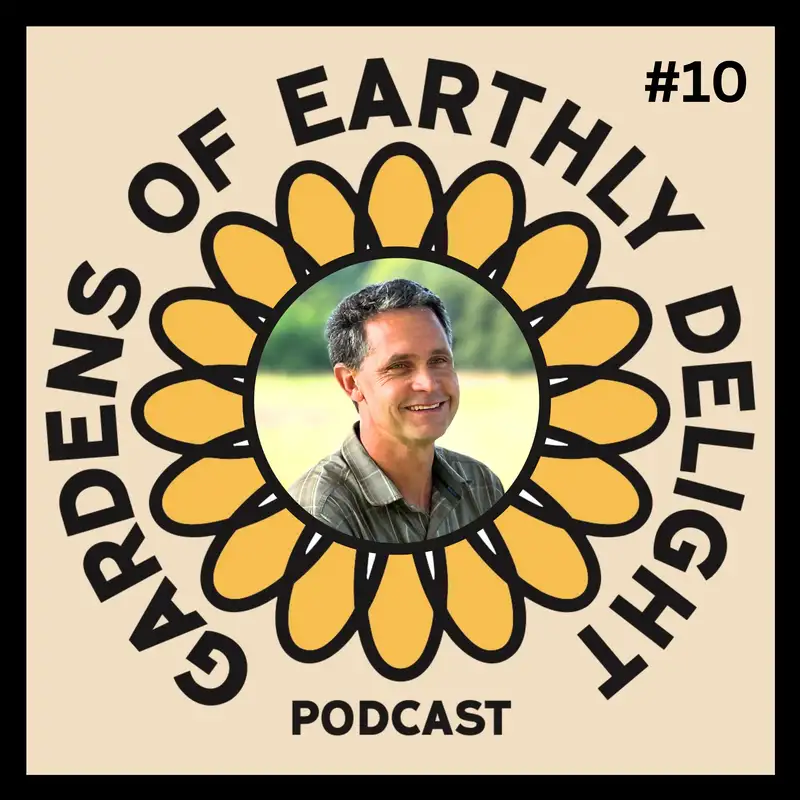
Jack Algier is advisor and chief agroecology officer at Stone Barnes Center in the Hudson Valley. He was their first employee back in 2003 when the place was a well cared for cattle operation and not much else. In the twenty-some years since, he has helped turn it into a 1,500 acre working landscape of pasture, vegetables, orchards, and restoration work, with a community of about 125 people around it.
His new book, Seeding Hope, What Plants Teach Us About Being Human, was published this week by Chelsea Green. And if there is a book that could embody the mission of my podcast, this one gets pretty darn close to that. We talk about observation as a skill that you have to practice, and why our hands and eyes are still the finest tools in farming. We get into land races, feeding community, the difference between seed security and seed sovereignty, and what the writings of Goethe and Rudolf Steiner still have to say to a working farmer.
Andrew (01:41)
why did you start farming?
Jack ALgiere (01:45)
Hm, why did I I started farming, partially because that's what my parents introduced me to. so I I think the farm that I grew up on in Rhode Island was really the base for that. it was a homestead farm, it wasn't a production farm, but it was we had big gardens and lots of animals and provided a lot of food for our family.
our immediate family but also our neighbors and larger family, cousins and aunts and uncles. And our neighbors, my godmother and her husband had a a cattle and sheep farm that was adjacent to ours, and that landscape I think has
you know, it was formative for me. was about six hundred acres of of forested and pastured lands in southern Rhode Island along the coast. And it gave me a real sense of relationship to nature and just being in and out of the farm and then working a lot in barns with my dad fixing tractors and cars and boats and all sorts of mechanics.
played a part of that too was sort of the nature relationship and my mother both my father and mother were both interested in organic farming and traditional farming methods and we always had Rodale encyclopedia on our coffee table in our living room and kitchen table and composting books and herb garden books and that sort of stuff and so those were the things that were those were the books that were out
For me when I was young, we didn't have television or anything like that. So it was very much the farm and the the black and white pictures of compost piles, I guess, that turned me on. So
Andrew (03:24)
Okay.
Jack ALgiere (03:26)
yeah, I I think, you know, after we sold that farm and I went to school for plant science because I really did want to continue to work with plants. I didn't exactly know I wanted to farm. And I tell that story a little bit in the book of like where that
Pivot point was the the real answer to why I farm today is the social act. That underneath the social action is my personal love and desire to be outside, to work with non-human living partners, and to be able to just observe that kind of space. I like physical work and
And also just I think farming is unique because it does kind of it requires so much disruption and mechanics and tooling and instrumentation that I have that side of me that was sort of built in. It was like a way to apply tools and technology into a softer living kind of relationship, I guess. And to me that's what farming is. It's it it is bridging those those worlds.
Andrew (04:32)
And so I had a question, but now I'm curious to phrase it in a different way. I w I was gonna ask you if farming ever stopped being a job, but now I'm curious if farming ever was a job for you and if it's something really different. Or if it is a job.
Jack ALgiere (04:47)
Yeah, no, farming
farming farming is a lifestyle. it's a life work. And I have endeavored to be paid for it. So yes. From that respect, what it did for me, like I think a lot of farmers who are successful, you know, who've been able to stay farming, which I think is a a sign of success.
is that there there has to be a kind of endurance, a drive to want to work hard. maybe even a little bit of over recognizing the significance of our physical impact as self-worth. so, you know, working hard to feed communities, making my place, you know, all those things when in my younger years
And and even today, I mean my work ethic is and the work ethic that I've my wife and I both shared with our children is to give it your all. just to put your whole heart into the work that you do. and farming just really allows that. It it truly does. But but I I think that it's work
when it comes to making sure that all of the different stakeholders, like the social aspect of it and making sure that everybody that there's like equanimity and empowerment and all across the you know, we're working direct market farming. I'm you know, I always know who has the food that everything that I've grown has gone into the hands of people I know for thirty years.
For a lifetime actually, but like for the past thirty years I know the people who are being fed from the place that I've cared for. And that has always felt really meaningful and yes, it's work, it's hard work, it requires exercise and practice and a kind of fitness sense to make sure that you always show up for it.
that's different than a like nine to five that it's always there, it's always writing, it's always storytelling, whether I'm there or not, and if I'm showing up late or not showing up, when I do return, there's a lot to review.
Andrew (06:43)
I like that you bring up the ethic, and that's reminded me. So I got a job on a farm when I was 14. So it's one of my first jobs. I had a job before, but it was a summer job. And because I had that at a young, impressionable age, that instilled such a work ethic in me to just get out there and get the job done. And you know, if you see a field full of weeds that needs to be hoeed or
you see a field full of zucchini that needs to be harvested that day or else it'll become like baseball bats. You know, just like
you have to get out there and do it because like you said, like nature's just gonna continue doing its thing.
Jack ALgiere (07:26)
Yeah, and I think there's a lot to talk about there. I I would say first I want to say that when I think about what a healthy food system is, I think about it as all of the participants being contributors. if any of us, me and you, anyone who's listening, feels like just a recipient of a food system, it's worth rethinking.
their significance, like what it is that we do, because we are all contributing. Like there's no way around it. But whether or not we
believe that to be true is something that I think is really important in healing the food system that we're in. because that's it is one of the most valuable metrics for whether or not a food system is healthy in a community is that does everybody feel like they're able to contribute in some way as a good buyer, as a community garden member, as a
supporting policy that protects public lands, farming, you know, any one of those things. That we have way we we have our daily, everyday habits that are really important. Probably the most important things are our daily practices that encourage regenerative kinds of things that contribute to nature and food and our health. so again, that was one of those things like if I could help communities get there, kind of like what you're saying about
Offering the podcast a welcome. I think it helps for there to be humans that are helping bridge and bring people back to nature and back into living productive systems and reminding ourselves that our hands and our minds are
They can be good for the earth. They can be good contributors. And they can be, you know, beneficial for the health of the planet. And I think that's a question. I think people have carry that question, whether or not we are here for good. And I I truly believe that. I truly believe that everyone is in a way. We just have definitely been led off the path.
Because of all kinds of distractions and things that, you know, are have gotten us to where we are, but nonetheless in some way distracted us from what the real root and ground is that's under us and why it's so important. so I I think that's great. Also, direct market farming, I'll also say that one of the things about my feeling about this is that.
I'm when I talk about farming I'm really talking about direct market, community based, regional farming systems that
Very large scale industrial farming systems that don't allow the farmers themselves to be in contact with the community r these days is necessary for us to eat. I mean, we really couldn't we don't have a plan B for this. So what we need to do is keep working on the generative side of things to encourage everybody to recognize how important our food systems are in our lives. And and nature for that matter.
kind of just simply without putting a huge burden on it that all of the beauty and health and stability in our natural systems are signs of productivity. Like those are the signs of real productivity.
Andrew (10:25)
And now tell me how long you've been on this one farm where you are now?
Jack ALgiere (10:30)
Yeah, so I've been at Stone Barns since two thousand and three and we are in the Lower Hudson Valley in Westchester County. we're a non profit that has sort of embodied this amazing landscape and and restored this beautiful nineteen thirties stone barn complex that now has
An amazing restaurant, Blue Hill at Stone Barns, all of our program work and team event spaces, cafe and programmatic spaces, and all of our research labs that we do for the agroecosystem around us. the farm is embedded both in owned property for the nonprofit, but also the state park preserve that surrounds us. So we manage and oversee about
fifteen hundred acres of land across the park preserve and are grazing across five hundred acres of open grasslands and ten acres of organic vegetables, a half acre of organic greenhouse systems, soil greenhouse systems, all sorts of perennial fruit and nuts and systems on our living landscape and
bunch of restoration projects and food systems research projects happening kind of all the time. So this it's a very active environment. There's about a hundred and twenty-five people in our community that go between culinary and research and ecosystems monitoring and farm practice and land care, livestock, the the sort of gamut. So that's what's emerged after 20 plus years of being there.
And when
I first showed up it was just a cattle operation. So we it was a a well cared for conventional cattle operation that we turned into a very mixed organic system.
Andrew (12:16)
And so how has your relationship to that piece of land changed over all this time?
Jack ALgiere (12:22)
Mm.
My first thought is there. It's very little, to be honest. it invited me in and I loved it from the day that I stepped on it and I knew that
that my job was just to steward it as long as I could. so this very simple relationship that I have with the land. I I love it dearly and I spend as much time on it as I can. and all those lessons that I get have come from that. Like I think that's the easiest thing to say. I could say I've matured in this language. I have learned so much from it.
You know, and I hope it remembers me.
Andrew (13:03)
What would that look like?
Jack ALgiere (13:07)
Yeah, well I think that is in the the landscape itself, the health of the the you know, I truly believe that the consciousness of a place has to do with the health of its soils and the health of its ecosystems and its diversity and interaction, the the the generated energy a place can make. And each place has a different kind of energy that it can make.
And as a farmer and a land steward, the job is to cultivate and curate that. and that often does last a lot longer than the person who's there, especially when they're focused on systems designs and things like that, big landscape transformation back to forest into native grasslands, improved, cultivated.
spaces, things like that. They it's not about the buildings we make, it's about the the trajectory we help direct the land base into. In a way that's it's probably I think it's like the most noble human role. because we we are significant disruptors. In fact agriculture is just a series of disruptions and disturbances that if done well
and appropriately applied provide all kinds of abundance for us and the rest of nature. And I think I had to remind myself of that a lot, that I'm not just that I am interacting with this thing and creating that ebb and flow all the time. And that's that energy is what makes a place so healthy and and abundant. I think it
It gets overlooked sometimes as if organic farming is doing something super gentle, but the farming or some farming in general is requires actions, physical actions and
When we first showed up at the farm, it was just grass pastures. So we built greenhouses, we put in vegetable fields, we started to transform the pastures, we immediately stopped using any herbicides and pesticides. We started building compost piles and started feeding fields and allowing the grasses to grow and
building the system. You know, adding the right number of animals to the pastures for pure grass fed management or for waste fed systems and you know, all these different things that basically under the same general principle of everything has a purpose, not just a use, and that we can apply those purposes, whether it's an animal or a vegetable, back.
And th these are the tools, the perennials, the annuals, the vegetables, they're the these are the instruments that that we can orchestrate as farmers and and sometimes hurt that landscape and and in our best intentions actually improve it and make it better and make it more integrated, like human integrated.
Andrew (16:11)
Yeah.
You know, you you talk about observation and so I have farming and gardening background, so sometimes people will come to me for advice on their gardens. And the first two things that I always say is before you think about or focus on growing vegetables, you're growing your soil. And then the second thing that I say is
At least five ten minutes every day, even if you're not doing any work, go out and just observe. Just go out and look. Look at the garden to see what's going on. So I'm really curious to ask you, how do you observe when you're going
What does that look like for you?
Jack ALgiere (16:53)
Yeah, I mean I guess it looks like this. it's it's about familiarity and and like conscious awareness I guess.
In the same way you might meditate on a thought. just being aware. I really try to encourage my team who is learning of all the farmers that I've taught over the years. when they come to me there's lots of skills they don't have. Maybe they don't understand small engines, maybe they've never used a cedar, maybe they don't really know the plant varieties, or maybe they don't know the pathogens that these animals might get.
lots of different questions and all kinds of practices and techniques. How to set up fencing, how to cultivate a field, all these big things, right? And these are there's a thousand things to learn. I mean farming is a is a massive list of individual tasks, many of them chores that are daily. and that can really absorb a young person's mind when they're first learning this. and it can feel really
industrial or something or like so technical that you really have to focus on that. But the reality is in between all that stuff, I'm always trying to encourage the team to gaze and to just like feel the landscape that they're on. Because there is a lot to learn and there's a lot of precision. And I won't pretend that I'm I'm not very acutely aware of the precision that needs to happen with my team.
that in order to do this without chemicals and in the best relationship with the land and the soil, that relationship needs to be really performance, like high performance fitness. Like our job is to interact with that landscape if there's anything. So that means listening, I guess, like what does it mean to interact and have a relationship with anything?
it's to be a good listener and to make sure that we're honest with our responses of what we're seeing and not try to trick it. you know, just be in relation with the land and in relationship with the community that we're working with that is demanding because those two things go with each other. And then I think what bridges a lot of that stuff is just the
the storytelling, the kind of mythology that gets created about a system. And I say that because like as soon as we start talking about what we feel and see, it's a story. You know, it's my story or your story, whatever. So it's important to tell that story as reverent as possible and and with as much pleasure as you can well in yourself about why you love that thing.
it was really hard work and all that toiling stuff. I well I think a lot of people talk about that about farming, partially because they love that. They love the fact that it's such hard work. But it's not really. They're covering up the thing that is really amazing. I think maybe even inside they know it already is how fantastic it is to work outside in spaces and to sweat and to know that you have to get out of bed early.
To get to this thing, or else it's going to be harder. And that these rows in the right time and like the way that we're preparing, it's all of those different tasks, right? They also have all kinds of room for observation. And
one thing I'll say about that, I I want to talk a little bit about relationships to in in the book I I do talk a lot about gathering information.
sort of the first the vegetative phase of plant growth and but but in general our initiation into any new place every new day is like
let's gather leaf over leaf over leaf we're collecting. You know, we're just collecting what that place has and kind of refining our our senses for the day. And then decision making is the is the flower, you know, it just
happens like that and the way we decide to follow through with that is the fruit is kind of the the way this structure goes. And that arc is I think I think really important to understand even when you are weeding through a field and
I think that's why it's important to talk about scale in farming, like why it matters, because as you were saying, you're working a lot of the audience members might be gardeners or or small farm operators. And
I think that market garden size and backyard garden and community garden size is wonderful because it is the least amount of degrees of separation from the soil and
I I talk about this a lot because farming farming in each scale requires a a certain separation, another degree of separation. You go from hands and small hand tools to power equipment to ride on equipment to cab style equipment to who knows what's future, autonomous, all this stuff. Every
Andrew (22:00)
Yeah.
Jack ALgiere (22:01)
time that happens
You know, I I can I run and train all kinds of large equipment and all that sort of stuff and I feel very fluent and operating and that sort of thing. and and I and I know the value of those large pieces of equipment because they allow me to get things done faster and and and you know, in scale. But really the best thing ever is this hand-eye coordination. It's the best thing we have. It's the most accurate, it is
it's brilliant technology. It's by far the best technology that we have. It's right here, right between our fingertips and our eyes. And and maybe between our taste buds and our fingertips too. And when we're in the space, you know, I'm sure you've experienced this. You can hand weed around plants and you don't need to look to know where the weeds are and where the stem of that pepper plant is. You know, our hands move around them.
And we feel all that. The eyes on our hands are allowing us to to kind of sense that. And as soon as we move to an instrument like a like a collinear hoe or a scuffle hoe or something like that, we have to extend that feeling down to the end. The same way like when we drive a car, you know, we know our corners. When we're standing with that tool, we're standing upright, our posture is there, we're looking out and we're feeling the end of that.
tool on the soil in the same way that we might feel our fingers. And so weeding a field, weeding around lettuces or weeding around tomatoes, the mind is not trapped in the weeding process. It's observing the entire surroundings. We're thinking about all kinds of stuff while that rote framework is happening. And I always find that like when our younger crew members
You know, it's inevitable that they will complain about weeding and how much you know, how just monotonous it is and how they want to do something more meaningful or whatever. And the reality
is like I actually really long to get back in there whenever I can because like the the it takes time and practice in that environment to to get to the place where you're not just looking straight down and so myophically focused.
Where you can really look up and you can gaze and you can imagine and you're working just as fast. Actually, faster in some ways. It's sort of like carrying the teacup and not looking at it.
Andrew (24:28)
Right. Yeah, you enter this it's
almost a meditative groove that you can get into and you you're just there have been times where I've been in a field hoeing for, you know, four hours straight. It's just my mind is not there, it's it's everywhere and it's there at the same time. And it's a beautiful thing.
Jack ALgiere (24:47)
Yeah. And that that takes practice to get to and to realize that all those chores do that. All those chores give us the opportunity to do that. And then it starts to see we start to see the rhythm that we're in on a on a week to week and then on a season to season and then on a year to year and then on a big long term rotational system like we kind of in intuitively or practically have taught ourselves how to be in rhythm with the place and
at the end of the day the the metrics for that are really just how healthy everything is and how abundant it is and how much extra work we can avoid doing because it was the right time and the right place and with the right amount of pressure. Which is like really the key to farming, I think.
Andrew (25:33)
Yeah. You brought up scale and it made me think
So in my own journey, I've kind of worked my way backwards. so I started on a on a big farm, you know, I was there for ten years. And so a at one point I was just driving a tractor for eight hours a day, just out in the field on the tractor. And as I've progressed through life in my gardening, farming gardening journey, everything's kind of gotten smaller. And so now I'm in this house with a very small backyard and I have very few plants. But it's helping me realize
I'm forming almost a deeper connection with the very few plants that I'm able to grow. And so it just makes me think about, you know, I'm I feel more connected to like the one sunflower that decided to bloom first out of the other six that I was able to grow. It makes you have a reverence and appreciation for every single seed rather than the field of seeds. So it makes me think about, you know, the
power of these market gardens and these community gardens because they being on a smaller scale, having people who can really connect with each plant a little bit more. In my opinion, maybe this will get proven someday, but the energetics of those vegetables are gonna be higher and I would argue that they would taste better.
Just
because of having that care and attention.
Jack ALgiere (27:03)
Yeah, I I think that's entirely true. I think first of all, the energetics, it's not it's not like witchcraft. We're talking about physics. I mean it's this is this is real stuff. Like biophysics and and energy and waves and and currents and all these different things that are happening out there, our vibes matter. There's no question about that.
positivity in the field is a thing. It is a thing.
Andrew (27:31)
Same in the kitchen. You know, if you think about somebody
who's angry making a meal like I don't want that energy going into my food. So yeah, it does go back to the field.
Jack ALgiere (27:40)
No, no. I mean it that's the d
development. And and if it's not there, it's it's just not there. Right? So I would say like, you know, not positive is not necessarily negative, but it's also not there. And you know, we can do that. you know, I think that there are a lot of virtues about you know, farming does not have a lot of leeway,
there's a kind of agreement we've made with society that we want to feed the community and it can't be inaccessible. That's one of the big things about food that's different than everything else. I mean, luxury items, when it comes to food when a food becomes a luxury item, which I'm very familiar with, we have very high end clients who are selling like very interesting and unique products that have high value because we put a lot of energy into them.
Or they are very rare or they've taken huge amounts of work to even save.
Andrew (28:41)
Yeah.
Jack ALgiere (28:42)
those have values, but they shouldn't be inaccessible. And I think that that's part of one of the the the big agreements that farmers all know and are working on, is that, we can't it it always has to be for the sake of making sure that everyone gets to eat.
I mean it's it's very it's kind of simple. The reason we have agriculture is so our communities are fed. we can also use agriculture as a conservation tool. And we can also use agriculture as a social development tool, bringing it back into our communities. Like you said, that one sunflower, that single basil plant in your window can do worlds of good for you.
It really can. Watching it grow and seeing what it doesn't like and where it where it thrives and you know the the sort of constant curiosity. When when we're curious, that's always a good sign. It's always
Andrew (29:42)
Yeah.
Jack ALgiere (29:43)
a good sign to be curious. And wondering how my belief system can change is something I think about a lot. And w you know, what variety is right or what practice is right or
What does it mean for this system to be sustainable? Those are questions I ask myself a lot and I ask our team a lot.
Andrew (30:05)
And I see preservation of endangered varieties of fruits and vegetables coming up more and more. which is great. You know, I'm such a champion of that. I want to see more of it. So, and you you touch on this in the book as well, I believe. So and the the term land race, can you for anybody that's listening that doesn't know what that term means, can you just explain what that that is briefly?
Jack ALgiere (30:33)
Sure. Well, a land race is a large community of plants that actually has lots of different varieties sort of in it and mixed in. I talk a little bit about a corn variety I have, Odophilee, which was originally an eight row flint from the northeast, Narragansett yellow. and it's had multiple names depending on who had been the keeper of it from the
Narragansett's where where I grew up was you know Narragansett India, Pequots, and then up into Mohawk and Haudenosaunee who also carry that seed in New York. and then the Italians that adopted that seed and made their polenta with the Otofile, which is the eight row. these are ancient varieties that fed communities.
lots of protein, lots of essential oils, moderate to high yielding, but not like excessive yielding like our modern corn. and generally mixed a lot, like crossed and mixed. These are land races, there's a lot of terms and seeds, but you could imagine that the wild race of that space or or even the early cultivation of it is there's a lot of versions of the same thing that it could be called yellow corn.
But of course,
my family has a slightly different one than your family. And occasionally we ch we would share. We might share. And we would cross those and hand back and because, you know, for the vigor of like getting the whole thing. In a natural setting, plants will cross all the time with each other and they make this they make the big matrix of the the plant community, that that particular varietal community that's there.
And from that land race you can start to select out certain lines that will stay true. I should state that there's a difference between a lot of the heirloom all the heirloom varieties and all the older seeds for the most part are treated as open pollinated crops that
which means that you know you can when you save the seed of that corn or of that broccoli, that you get the same corn or broccoli.
that you grew before r relatively. and that a hybrid is two varieties that crossed to make a vigorous known new variety that if you save the seed of that all bets are off you kind of get the whole spectrum of what's in that the genetic package all the ideas come out out of that hybrid. So
There's a lot of controversy about whether people should buy hybrids or just have open pollinated seeds. I always say a hybrid is a very natural thing to have happen, but it has been very industrialized. So there's a spectrum. Like we make farm hybrids all the time from taking one variety of pea and crossing it to another, and then we make a hybrid that comes out of that on the farm that we can save. Now we love both parents and we love this new one.
That does something different.
the same is true with corn. So a land race is actually much is sort of back another couple of steps, sort of like this big genetic pool that presents itself in different ways. So I'll explain that the eight row flint corn, for example.
It's long, they're usually when they when the plant is really pure, when I first got it it had all kinds of weird genetics. So I because there were very few growers that were actually produ still growing this corn because the industrial varieties, hybrid varieties had kind of eclipsed the production model. But this very valuable, highly nutritious corn was getting left behind. So the seed came my way.
Andrew (34:12)
so the hybrid field could blow into an open pollinated field and mess with the open pollinated field.
Jack ALgiere (34:20)
absolutely. Yeah. I mean it's very promiscuous. Corn corn is like extremely promiscuous. So it's it's always crossing and and blending if it miles apart and it can cross. But when we grow that out again, we we can start to generation after generation call those lines and and select the seed that we want to keep in a particular direction. And so we're we're kind of unlocking and sorting.
out the bad I can tell this is like cow corn in there so we're gonna we're not gonna s save any of those cobs and you know as they're crossing. So over multiple years the the cobs continue to get more they they become more true to themselves. I'll say that because it is a little bit of a land race what I have. And sometimes like we have a line that is like this beautiful sort of mahogany color.
And when I save the seed of that variety, I get a pure mahogany cob. Right? And so I can segregate that line and make it its own variety. I have a very beautiful long orange one. There's also a line, about 5% of the population makes a 12-row corn. And I can select that out if I want to. But if I don't, then some of the corn has 12 rows, some of them are purple, some of them are mahogany.
some of them are almost white and some of them are golden orange. And
each one of those lines could be selected independently, but I like to grow it all together as a race.
Andrew Valenti (35:57)
There might be an ad right here, but this season, like the first, is ad-free. That's only made possible by the people who listen to it, and there are two ways you can be one of those people. You can make a one-time or recurring donation through our fiscal sponsor, which is tax deductible if you're in the United States. Or you can subscribe to the newsletter for $7 a month, where you get the extended notes for every episode, plus parts of these conversations that didn't make the recording. Both links are in the description and the show notes. Thank you for the support.
And now on with the show.
Andrew (36:29)
I'm curious to get your take on, the difference between seed security and seed sovereignty and why either matters.
Jack ALgiere (36:42)
Yeah. That's great. That is definitely something I touch on in here. And I think that is is the it is the big dilemma. in a way.
I'm not sure which one to start with. Seed sovereignty is oldest. So
What that means is it's important to understand, deeply important to understand, that the plants and animals on this planet are the things that in in the specific locations are the things that made us who we are today.
And we found interesting and we saved well before agriculture was a thing, we were still selecting, we were still moving through, choosing those choices made us. No question about that. Hundreds of thousands of years of inner development is from those relationships to those plants. And we selected them. And as agriculture became a thing.
We really concentrated that idea. And that cultures that exist today, all of the indigenous cultures, have a large diversity of plant material that identify them, that are their identity, and their access to those plants and the and animals and the way that they interact with the stories they're telling, whether those are wild or tame things.
They're still built into who we all are in the in the communities that we live and the beliefs that we have. And that is an absolutely wonderful thing to consider. And I mean, really, it is like feels like exactly what we all kind of long for, is like to have that kind of deep connection to place. And at the same time,
With all of the different things we continue to invent and make life easier and sort of skirt around the rules of nature and the limitations of nature by you know adding more energy all the time to the system. we've inflated populations and we've created all kinds of dissent and boundary issues and all these things. All those kinds of things have led to
famine and poverty and all these things that that exist that are outside of that healthy peasantry that used to exist. so developed world developed countries like ours and you know others around the world have made a point to make sure that
We're protecting that that we have seed security, that everybody has access to some kind of food to eat. and all kinds of research and science has gone into making that, and all kinds of expense and policies and all these attention to that. you could argue that that
decision has saved people, has saved communities. And I think that's where it's such a complex conversation to be having, because I I think I lean more towards on the the emotional side of things about what what is it for us to be sustainable on this planet in the long run? Is it for us just to be fed or is it for us to really have identity and and deep understanding of our relationship and pleasure on this planet?
A future that is not delicious and beautiful and compelling isn't really a future. It's not it's you know what I mean? Like it's it's
a and so I I would say that there's a lot for the industrial world to understand about that the indigenous cultures of this world that have relied on things like sovereignty are not the past.
I think that's what we're all a little bit trapped in is thinking that this industrial thing is in some way a version of our future. And I I don't I think that it it's just it's an iteration. before we take too many more steps, we really do need to check that because we have lost over 90% of our vegetable diversity on this planet and as much of the animal livestock selection.
That is very unstable for us as a as community from a nutrition standpoint. And it's also just sad to think that we've lost so much diversity that we'll like the only way we get that back is by practicing again the selections, like getting it in the hands of people and not just in the hands of like a very small handful of companies that essentially, have proprietary rights over it
Andrew (41:41)
Yeah. I mean you mentioned nutrition but it also I asked the question to you that why should it matter to an ordinary person going to the grocery store eating dinner whether a seed variety gets saved or not?
Jack ALgiere (42:00)
it depends if they if they really love that thing, how much they love eating, I guess, and how much they connect to cooking that food. I mean we're celebrating every variety. We're always testing against things. It's like it's highly rewarding to have an adventurous diet, I think. if you can. And mostly because you just to understand.
what the potential of that thing is. I think most of the time we learn through negative experiences more often than positive experiences. And so if you have that one moment of eating cold canned spinach or something as a child or peas or or like overcooked Brussels sprouts or something, like can ruin a a taste bud.
for a lifetime unless they get a chance to like experience it again. Like, we find all the time, I always love this. I I just really truly always love when people like have that personal epiphany of like, my gosh, that was like the most amazing carrot I've eaten ever. You know, and when somebody says that I can I I feel a little bit like nice, thanks. And you know, it's a compliment to me.
But it's mostly what it is, is this feeling of like these people just tapped into their ancestry in that moment. They remembered their grandparents. They remembered like their roots of like, I know that flavor. Not I have never tasted that, but I this is a memory that has was lost. That is more like that.
And I think that the same is true for when we see something really beautiful. It doesn't really feel new. It feels like present and now. You know, it feels like, yeah, I've always known this. I want that more. I forgot that that's so important in my life to have this kind of nourishment. and I I do think that that's one of the reasons why we should be aware of that. I was
It was funny, we went on a trip, we were I do advisory work for organizations and families that want to turn their estates into public like you know, farm community farms and things like while we were headed to this one in in the mountains in Colorado and
It was seemed like everybody we bumped into, the our driver and the lift and the and the guy that was sitting next to us on the plane, would we never brought up that we were farmers or anything like that, but they brought up about their diets and how they were eating and how they chose like like certain vegetables and things like that. And it was so interesting to to know that that this was a conversation we didn't provoke. I mean, we're living in this all the time, and I never think
I always think that people just don't spend enough time thinking about this, but both of these characters on this trip, that was the kind of that was the conversation pitch that they could sort of brought forward. And I thought that was really interesting. And the driver was saying, he's like, We never buy seedless anything. He's like, You need the seeds, like seedless. And so so it's very interesting to listen to this thing about him saying talking about seedless watermelons in this case.
And I was thinking like
I wanted to interject, but I didn't because I just wanted to hear his whole thought on this. I didn't want to correct him or anything because a seedless watermelon, you can't save the seeds, but it also it wouldn't be able to save itself anyway. It's it's a hybrid. It's like making a seedless watermelon is it's sort of like a trick. It's an anomaly, right? So
Like it's not really seedless, it's just not productive seed. But if it had seeds and it was still a hybrid, you wouldn't be able to grow it again anyway. it's just whether or not you like to eat the seeds, I guess. So the question then, well, I just thought it was like a sort of a nuance. they were chipping away at this question of like, we do need to save these seeds. but I don't really understand. You know, it it was sort of distorted and
As I was observing it, I was thinking, all right, this is again back to why we're doing this, why I want to be so close to the question, That why I want to be watching the plant grow and understand what it's doing. the science backs up the intuition generally, and the intuition
develops through practice.
I always try to we do a lot of research and studying everything we do. We basically have all these systems in place on the farm, lay rotations, sort of perennials and annual systems, and multiple year crop rotations, seven and ten year crop rotations, very complex mixes and timing. and now we have all kinds of climate research studying how we do it, like the impact of what we do, not
Trying to be like, you what you should do? You should increase the nitrogen, they're they're they're not intervening in the system, they're studying us. and that's I think a really important way of applying science and technology to the work that we're doing. And we're on that, this is sovereignty again, sovereignty versus security. Is that in a way.
in one side of it, the agroecology side of it, the sort of sovereignty side of it, is sort of teacher man to fish, right? That's this idea is that if we have this experience and we're able to really do this over time, we start to learn those lessons in that experience. We see what crosses and we can share this stuff. If we don't practice it.
then we're just not close enough to even ask the right questions. We kind of get it through the label. know, and the the mascot of whatever the thing we're eating. whether it's, you know, a toucan or a tiger.
Andrew (47:49)
Right. It's funny that you bring up the the watermelon story. 'Cause just today my wife and I went to a a local, fresh produce market. It's where everything is imported. you know, they have some local stuff. I'm in the Netherlands actually. we see the bin of watermelons, we're like, ooh, that actually sounds really good.
And my wife loves the watermelons with seeds. She asks, are there seeds in these? It's like, yeah, yeah. Bring it home, cut it open, it's seedless. It's like it was like a disappointment. and it's funny too because yeah, it's like, this this doesn't feel as natural as it should. You know, it doesn't feel like the true experience that that we were looking for. It's like the the watermelon
The watermelon industry, decided that the seeds were actually a nuisance and presented us with the seedless watermelon.
Jack ALgiere (48:46)
Well, because
because the cons because there's a lot of people in the world that were like, I would eat watermelon if it didn't have seeds. And
at the end of the day, again, it's like plant breeding.
Is essentially like a series of parlor tricks. we can do all kinds of things, and and there are some very talented seed breeders out there. and this is to to take a way to to sort of cut out the very high-end industrialized seed breeding like technologies just to get to the root. I mean, plant science is highly complex and very established.
There's lots of different things that can be done, rescues and all sorts of different things to make a seed work. And in these days, these are these are not, you know, these are non-GMO, you know, non-like transgenic things. There, but there are all kinds of very high-tech technologies that that come in to allow somebody to do this. And there are lots of techniques on the ground that we can use to
To produce all kinds of things. You know, one of the things about growing a seedless watermelon, for example, is that, you know, the seedless watermelon that you buy is a hybridized seed from two parents. when you plant all those things, you have to have pollinator varieties that you plant with the seedless watermelon, because those seedless watermelon don't cross pollinate, obviously.
So you put these other plants in there because they still need to be crossed for the fruit to ripen. So you do have to put a pollinator species in there, one variety in there, like sort of intermixed in the seedless patch, in order to get the fruit to ripen, because that does need to be pollinated. It just the seed won't mature. And so again, it's a little bit of a parlor trick, more than a diversion from nature. I mean, in a way.
not impossible for there to be wild seedless watermelons.
They wouldn't be that common. It'd be pretty rare in a you know a wild African watermelon patch or something, but they they they could exist. And so things like that, they're not really that high tech, but we we look at them and we see like, you know, tr crates full of water giant seedless watermelons. And now we're like, Where have we gone? Like, why have we gotten here? That
that's a different kind of question. That's more
about the
industrialized thing. And I think I just want to mention what you just said and that what it means to anyone to eat a watermelon with seeds and like why having seeds matters. I I think just acknowledging again this is part of observation in general. Like we're in the gardens. We get to be in the gardens daily. And in those relationships we can look at the little intricacies of the petals and
watch one leaf get a little bit thinner than the next and all these different daily observations that that are teaching us like these really small but cumulatively significant lessons.
So a lot of people don't get to do that. a lot of us just spend a huge amount of time around each other, in that sort of egocentric space and forget the amount of conscious technology that exists like in nature. And so when we get out into nature, that's great. But I also think that food is a is one of the last vestiges we have as a pathway back to nature.
You could not touch grass or walk on soil for most of your life. But every day you have to eat a thing that was grown on this planet.
just observing that thing is looking at the other like we are nature, yes, but we shouldn't be learning solely from ourselves because we're we're two inside. It's like
You know, we we need to look at other, which is why I wrote this book in a way. I wanted just to make the point that we're not making up any new patterns necessarily. We're following ancient patterns and we can name them and we can observe them happening all around us on a daily basis, because especially the choice to use plants as the sort of subject of biomimicry in this book, is to look at plant metamorphosis and change over time.
is to know that there's four hundred and fifty million years of information that is still growing outside that we can see. The mosses, the ferns, the flowering plants, the pines, There's a timeline of organic patterning that we get to learn from that's right here, alive outside, not a fossil, not a a story.
But like a living thing that is expressing that emotion or expressing that idea with tremendous amounts of elegance. So it's just you know, and I think that's
What we miss. That's the key piece. it's not about all the intellectuality or or even intelligence. It's not about data. It's about conscious relationship. And the difference is for me continues to get more and more significant, especially as somebody's like, you know, we're trying to co opt this word intelligence as if it's something that's it's consciousness that we have.
if you needed more information, if there was some new piece of information that was really going to get you to think differently about the climate, for example, you would have probably already heard it. There's something more in there. It's not about how much of a case that needs to be made. It's the sense of of recognizing that I wanna be in nature because it makes me feel good. I want to be on this farm because I feel purpose and meaning.
that's the that's it's simple in a way.
Andrew (54:36)
And
so in the book you bring up some influence or inspiration of Goethe and Rudolf Steiner. And were these some of the things that you learned from their teachings or writings that you use practically or just within every day?
Jack ALgiere (54:55)
Yeah, yeah. Well, you know, Goethe to Steiner is a a lineage. It's an interesting lineage.
Goethe, of course, was late seventeen hundreds, early eighteens, and was an extraordinarily unique thinker in that time. he saw the cracks in Linnaeus, he saw the cracks in Newton, and he looked at light
And he looked at growth and he looked at nomenclature in a very
anthropocentric way, like f through his eyes. His hi it was always about color is not just about light through a spectrum. It's it has to do with our eyes. It's the intersection of those lights. And the more we look at and learn about light, that continues to be proven today. The best light technology research that's happening is recognizing that that what we're seeing is not just a thing that we're looking at, is that it's the interaction of color making.
And texture making. And we're we're learning that we're proving this thing that that he said hundreds of years ago, without the science, but but an intuition. and studying all these different things that he was looking at. Just he had this beautiful way of seeing. obviously Goethe impacted a lot of people in Europe. A lot of the the polymaths that came from
that space and Steiner was really focused on mostly focused on childhood development, early childhood development and occult sciences and things like that. in his last year, the year before he died in nineteen twenty four, he gave a lecture, he gave a series of lectures that became a book called spiritual renewal of agriculture
it was an eight course lecture that he gave in in Kobrowitz Poland.
So these guys had these his perspective wasn't about agriculture. A lot of people know about biodynamic agriculture, or at least have know that term. and what he was really doing, I I always go back to the time when people think in a certain way. So the 1700s was an incredibly important moment historically. It was like a the you know, coming out of the the enlightenment into Renaissance and like all of this that was happening there, the beginning of industry.
And all these different things. So it was this very significant pivot point. And it was the hybridization of those things that gave him the insights that he had, I think. And the same is true for Steiner. The hybridization of these worlds of the traditional knowledge, the the the nineteenth century meets twentieth century, and all the things that happened in those early twentieth century years.
with synthetic nitrogen and petroleum and all the extra energy and all these things that we created. And we created a new paradigm that was all of your old rudded traditional things are actually the past and we have something new for everybody to adopt. And that that is like shown in the world wars and all the industry that that what you know what the 20th century had to offer.
And I don't want to discredit any of that stuff because to be honest, like where we are now is because of all those decisions. But I would say one of the big misses that w and why I go back to those people is because when I look at the incredible the amazing transformative things that are happening right now in our lives and we're just like, you know, putting along, acting normal, the reality is the world is changing dramatically right now again. And
Whenever those things happen, we're faced with some questions about the past. The past used to be like the the traditional knowledge of how we looked at certain things, like our spiritual connection to land, for example, which was just built into our cultures that the seeds, the varieties that we were not dissociating, you know. But once we started to do that and apply more and more science and technology on our work, we dissociated and stopped
Appreciating the values that were in this thing, I think, too quickly. We too quickly sort of dismiss the great values of holistic systems for the sake of the new thing that kind of replaces that. Like we we don't recognize what we don't get to do anymore is a thing that we'll never experience again.
I think that's a really important thing that Steiner was saying to the farmers when he was there. Not here's how to farm, but don't forget about your intuition as you embrace new science and technology. Because if you can hold those in a balance, you can see more clearly about like what really operates presently.
Goethe was really the one that for me was like really the big epiphany because he was explaining the plant. he he wrote some books about the metamorphosis of plants and animals and
was the first person to really identify the idea of a plant as the archa the single archetype of a leaf. Like all plants are essentially a leaf. And they are they transform from that that basic structure is everything that that plant ends up being the leaf, the node, the stem, that that plant in the course of its whole metamorphic life
goes through three big phases of growth. It's this incremental, slow developing vegetative state of capturing and like pretty discreet and out of the way. Like it doesn't want to be seen. It's just gathering, it's gathering, it's gathering. thing happens inside it once it's filtered itself enough and all the conditions are right, it's ready to flower. And it does that all
in its inner being. I mean think about the plant like
You ever see blown neon glass tubes, right? This I always think about the the cambium of the the living being inside that plant is essentially just a glass column, clear, thin, tipped at the bottoms and at the tops, roots and stems and everything. And all new differentiation comes from every tip. And when that plant decides to change.
And the mechanisms are there to have that happen. They have a thousand different kinds of brilliant ideas around their mechanisms to change. And what might influence that change? They're there to do that. But they, in the process of getting to that point or when that flower decides it's going to really curl itself in and turn into the inflorescence, when that leaf pulls itself in, the inflorescence is tight inside that cells and then comes out.
And spontaneously provides us with this flower, this thing that is it is the decision, it's it's the intention into the world. Here I am. It was attention to all this stuff, gather, gather, gather, gather. Then the intention of this is what we're doing here, right now, right? Every plant we know, we basically know because of its flower.
Like that's the thing we remember. That sunflower, we're looking at that head. When we imagine that thing, we're seeing that. You the second thought is, yeah, I know what the I know what sunflower leaves look like.
But it's the flower that is the most magnificent thing and it's the thing that is like representative, right? It's the most present, like flower,
and I think that's really important because
In our process for it to get to that place, it was it had to filter. Like every one of those things was like gathering and gathering and then maturing, changing, filtering out that sap, not being so hungry anymore for sunlight and nitrogen, but actually weaning off of that and allowing the plant to like kind of thin out, like get get prepared for this this new elegance.
That's going to come out of it because it it needs to let go. This is the the one of the things about feeding plants, like why I think it's so important that we feed soil and not plants, because the plants feed themselves in the soil. When you feed a plant with like liquid fertilizers and things like that, the plant gets the essential things that it needs, but often accumulates extra things that it doesn't. And this is why when you overfeed a plant, it doesn't flower well. Because it it
Not able to shed what it needs to to get to that next phase. That flowering phase is metamorphosis, it is a transformation into it's but all those petals and the sepals and the stigmas and all these little parts that are on that thing are just versions of expanded or contracted leaves. And then it does this amazing thing. Plants came up with this idea of
splitting, making this break in time in the in the moment. Like the thing about the flower is it's this stage that allows this thing to happen that breaks the genetics into two pieces. And it leaves to chance and all kinds of collected memory that that pollen, that this finest version of itself is going to be released from that plant and find its way to that little sticky pad.
on that pistol of that new flower. What happens between those things, it nobody knows. Like the it is just let go of the wheel and be as present as you can and trust the fact that nature, the sort of anastomosis of nature, wants to reconnect. It wants to reconnect. And the plant, right from as soon as there were flowering plants, which wasn't an immediately
that but but that innovation, all that's that technology that these plants like tested and and the R and D that happened in plants over over the millions, hundreds of millions of years is extraordinary. And then that plant, once it makes that contact and all that stuff happens in these things inside that plant, then now it has this opportunity to see what emerges, right?
And in that process, that's where all the creativity comes. Like once you have made the intention of an idea or a project or something that you want to do, or a lifetime, whatever whatever timeline you're talking about here, a project, after that, once you've made the intention, now you're in the sort of prototyping and coevolution and pretending in some ways. Like if I was playing with these.
these terms. I'll just say that inevitably nature and all the living things and us have this desire. And as farmers I would say this word is pretty pretty solid is to tend. What does it mean to tend? To our place, to ourselves, to each other? tending is is really an important term in the whole of
of stewardship and agriculture because it's it's a practical thing. And then I kept playing with these words like, well, that's interesting because what does a tend mean? What does attention mean? How does that why is tend in there? You know, we're caring for the our our sensing, right? We're tending to our senses in this moment of vegetation, of like this parsic. And then we get to this place of intention.
And here we are again, but but tending to the very specific, the very presence of a thing. And then was playing with this idea, and then that's where this pretending came in, because I was thinking about my children and thinking about just in general the playfulness that needs to be in this world that we should all continue to cultivate for ourselves. And when we look at plants.
we shouldn't think that it's all serious. Like the reality is there's some really fun stuff that they've come up with and it's very imaginative and very playful. wings and stickies and floaties and fur and you know, you name it, juicy stuff, sour stuff. the amount of imagination that goes into the fruiting and what
And the whole purpose of that is just to protect that seat.
Right? It's just to get it out. so that's where the metaphor really caught me and again that came essentially out of Goethe and reinforced by Steiner, who continued just to say, lean into that imagination and that intuition and and reinforce it and verify it with science.
and I think that's kind of what the book is trying to say.
Andrew (1:07:22)
Who
is this book for? And what do you hope someone with no land or garden will gain or or or get from from your book?
Jack ALgiere (1:07:39)
Mm.
Well I hope that anyone who's curious about nature and their relationship to food and farming and gardening will find some inspiration from this. I I really think that I tried to make it a kind of a combination of there is a pretty good sized glossary of terms in there. so I do use some more advanced botanical ideas 'cause I'm trying to get some thoughts across, but I don't
I didn't never want it to be feel like too sciencey. And even in the writing of the book, I I realized as you know, I'm a I'm not a experienced author in this way. And so I'm learning the one of the things that I learned most about writing it is just wanting to make sure that my voice was authentic and that I wasn't lecturing. that if I do have sections that are in here that are a little bit more informational about like
botany or something like that. I try to be brief with it and just be clear about what I'm trying to say so that when I get back to the storytelling, those are just tools to of imagine with. and that's kind of the idea is that
I think the best outcome for a book like this for anyone is just to think a little bit deeper. Allow yourself to think a little bit deeper about a thing that you that feels so plain and and common and simple. because the living natural world around us, we we all, it doesn't matter how much experience any one of us has, we take it for granted and there's so much more to learn from it. So
If we're just like, yeah, outside weeds, plants, we're we're we're missing something. And it's not about you know, making sure that we can name everything or test or tell other people we know about it. It's about the learning experience we get in relationship with nature that we have a massive deficit for in our society.
And again, we didn't choose that. You and I, our generation, did not choose that. This is a thing that we have we carry that burden. And it's our choice for the sake of ourselves, for the sake of our children, to expose them to those kinds of things. And even as we look to space, to high tech, to all these these like
sort of tantalizing future things that we could be. I I think that we can gain so much more from our choices as we go forward into that like kind of a mystery of a future by reinforcing what we actually have here.
Andrew (1:10:25)
What is one of your favorite food memories?
Jack ALgiere (1:10:29)
Mm.
A lot of my food memories, to be honest, are really about eating things out like from the garden. I think those are my earliest memories. Every time anybody asks me this, I'm like, is it wasn't there like a lasagna sometime I ate? It was so good. I'm sure. There was. But those aren't the really the memories at stick. Like I remember my grandmother's food. I I remember the people. I remember my my grandfather
Cooking smelts and like making huge messes on stoves that he'd caught, you know, the hunting and fishing and gardening and like all that stuff was like very rich in my family. There was like a lot of it. so I was always around it, but the like the pure memories are like the day my son, who's now twenty-one and studies grasslands and ecology work and that sort of thing, his first food was
this Asian pear that was in our field. And and I just I just remember the first foods. Like I remember the first time I ate a tomato. I remember the first time he ate that pear. I remember the first time our our son like tasted fennel in the face that he made when he fried like fennel out of the garden. I remember the so many times the faces of people of seeing that
Like what happens to the eye when the orange of that carrot comes out of the ground? those are the food memories I have. It's like that connection of the raw product, I think, is just like wow. Like how does that even happen? How does that like nobody did anything to the this thing is like this.
how amazing is that? How amazing is that? And it just yeah, I think that I I would say that, like I'd love to cook, but I think my memories are are really just always back to that like
That perfect peach and the perfect Asian pear and that carrot and the fennel and the sugar of a winter spinach leaf and the you know, all these things they they they're the things that keep like I'm like, yeah, I want more of that. I want to get back to that.
Andrew (1:12:43)
Yeah, it makes me think of one of the defining moments in my life. I was probably four or five, the garden in the backyard and I remember I have the memory of pulling the carrot out of the ground and just being like, What? Running over to
Jack ALgiere (1:13:01)
Mm.
Andrew (1:13:02)
the garden hose and spraying it down and eating it and just being like, Wow, that comes from out of the ground?
Jack ALgiere (1:13:08)
Yeah, I mean the number of times I've heard kids say, Who put that there?
Andrew (1:13:13)
Yeah.
Jack ALgiere (1:13:14)
That's so good. That's the best question. That is the best
Andrew (1:13:18)
Who put that there?
Jack ALgiere (1:13:19)
question. I'd love that. I love when that when people when we we all have to realize that. We just all like nobody can tell you that. That's what's
Andrew (1:13:30)
I love that.
Jack ALgiere (1:13:31)
good about it.
Listen to Gardens of Earthly Delight using one of many popular podcasting apps or directories.